
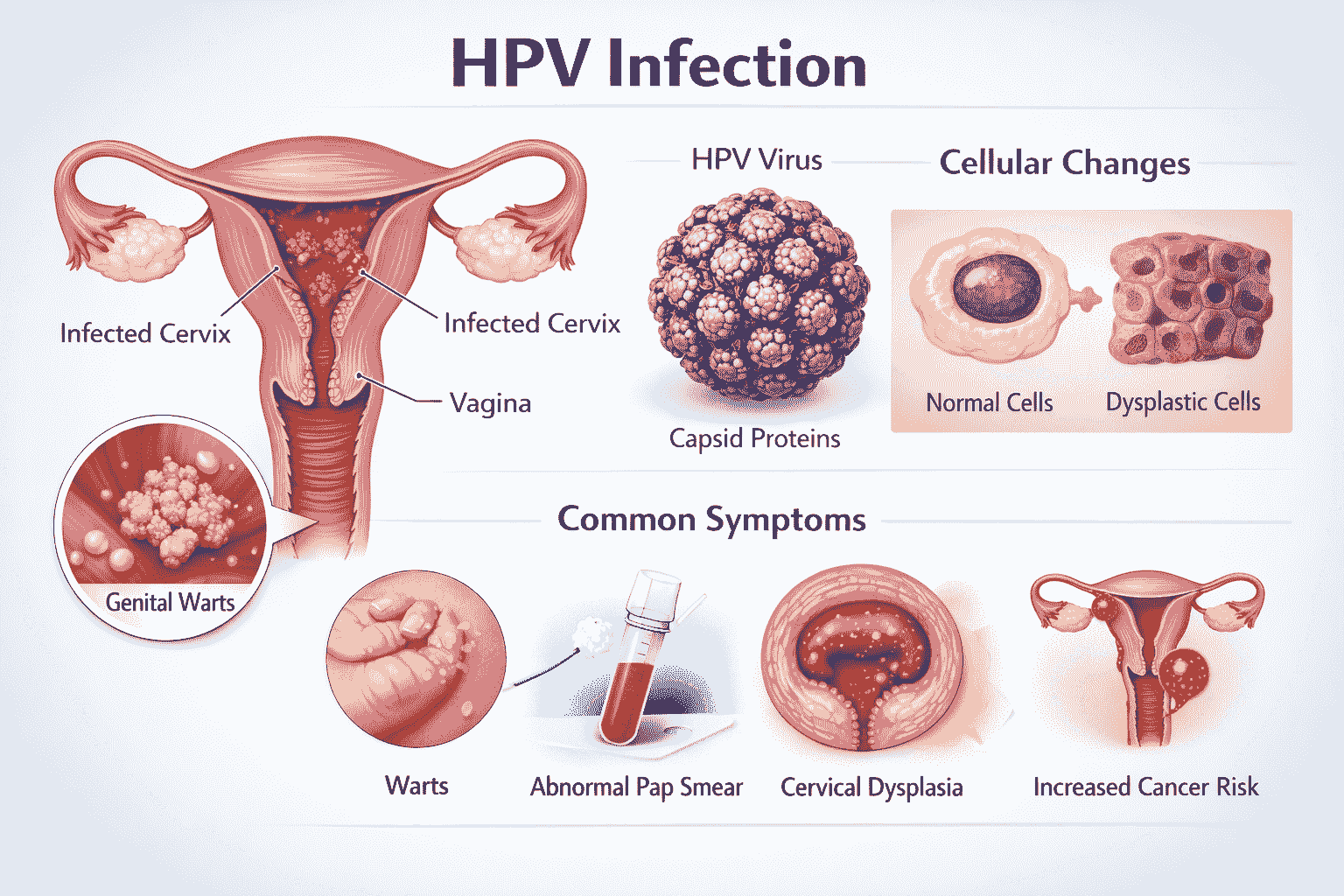
HPV (human papillomavirus) is extremely common. Most infections clear on their own within a couple of years, but persistent high-risk HPV can lead to cervical cell changes and, over time, cervical cancer if not detected and managed.
How to diagnose
- High-risk HPV testing and/or Pap (cytology) as part of cervical screening
- Colposcopy if results suggest higher risk or unclear findings
How to treat
- Often: watchful follow-up with repeat screening (many infections clear naturally).
- If abnormal cervical cells are found: treatment depends on severity; low-grade changes may be monitored, higher-grade changes may be treated to prevent progression.
- Prevention: HPV vaccination + screening offers strong protection.
FAQ
Does HPV mean cancer? No—most infections clear; screening helps prevent cancer.
Does HPV always cause symptoms? Often no.
Pap vs HPV test? Pap checks cell changes; HPV test checks for high-risk HPV.
At Farhod Madad Shifo, we explain Pap/HPV results clearly and guide you through the next steps—follow-up screening, colposcopy referral if needed, and a personalized care plan.
✅ Message us or book a gynecology appointment.