
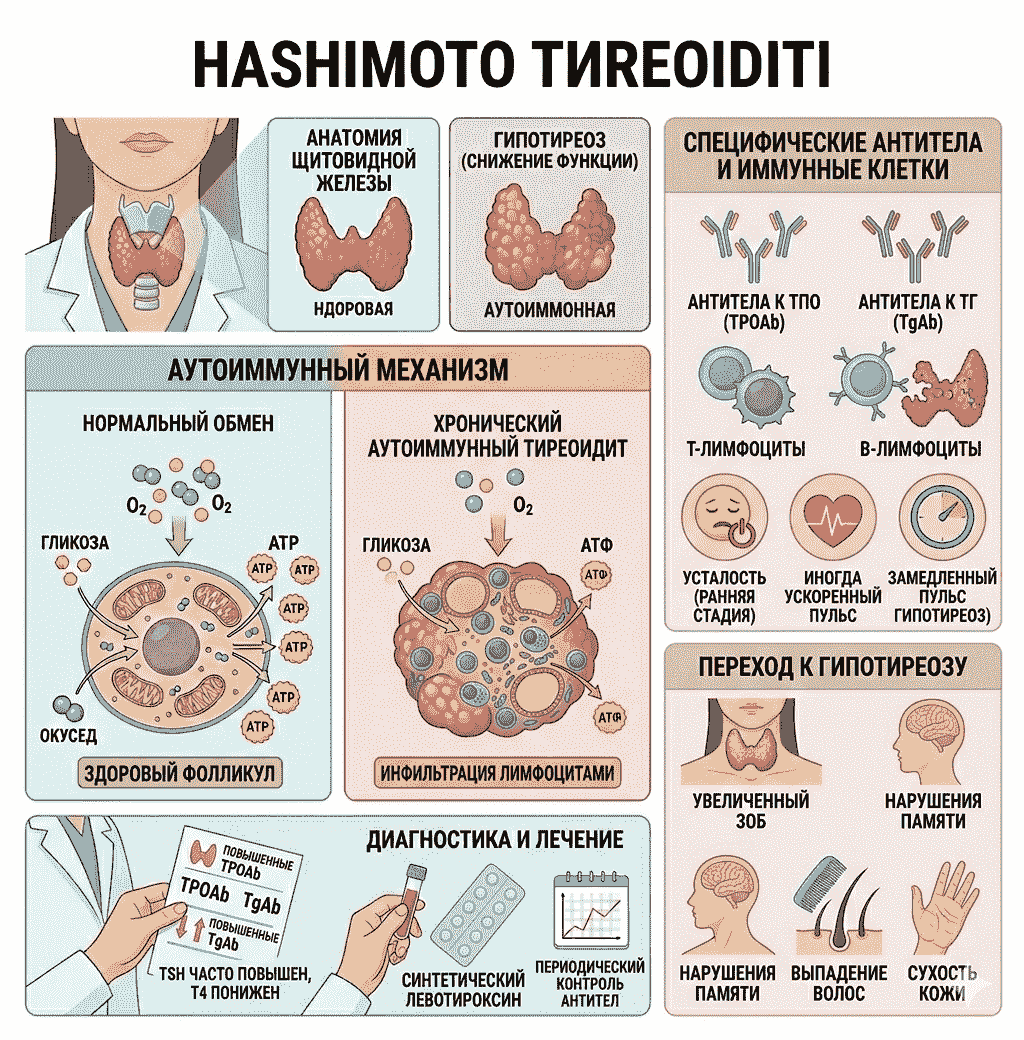
Hashimoto’s thyroiditis is a chronic autoimmune condition where the immune system attacks the thyroid. Over time, it may damage the gland and cause hypothyroidism.
It can progress slowly, and some people have no symptoms early on, which is why testing matters.
Common symptoms:
Often overlaps with hypothyroidism: fatigue, cold intolerance, weight gain, constipation, dry skin, hair changes, and “brain fog.”
A goiter (enlarged thyroid) may occur and can cause neck pressure or discomfort.
How to diagnose?
- TSH + free T4 to assess thyroid function.
- TPO antibodies (TPOAb) (and sometimes TgAb) to support autoimmune cause.
- Ultrasound may help in some cases.
How to treat?
- If hypothyroidism is present, standard treatment is levothyroxine replacement.
- If antibodies are high but hormone levels are normal, treatment may not be required, but TSH monitoring is recommended.
FAQ:
Is Hashimoto’s cancer? No—autoimmune inflammation.
Do high antibodies mean I must start meds? Not always—depends on TSH/T4.
Main tests? TSH, free T4, and TPOAb.
At Farhod Madad Shifo, we’ll interpret your thyroid tests clearly and create a practical plan—monitoring if appropriate, or treatment if hypothyroidism is confirmed.
✅ Message us or book an endocrinology appointment.