
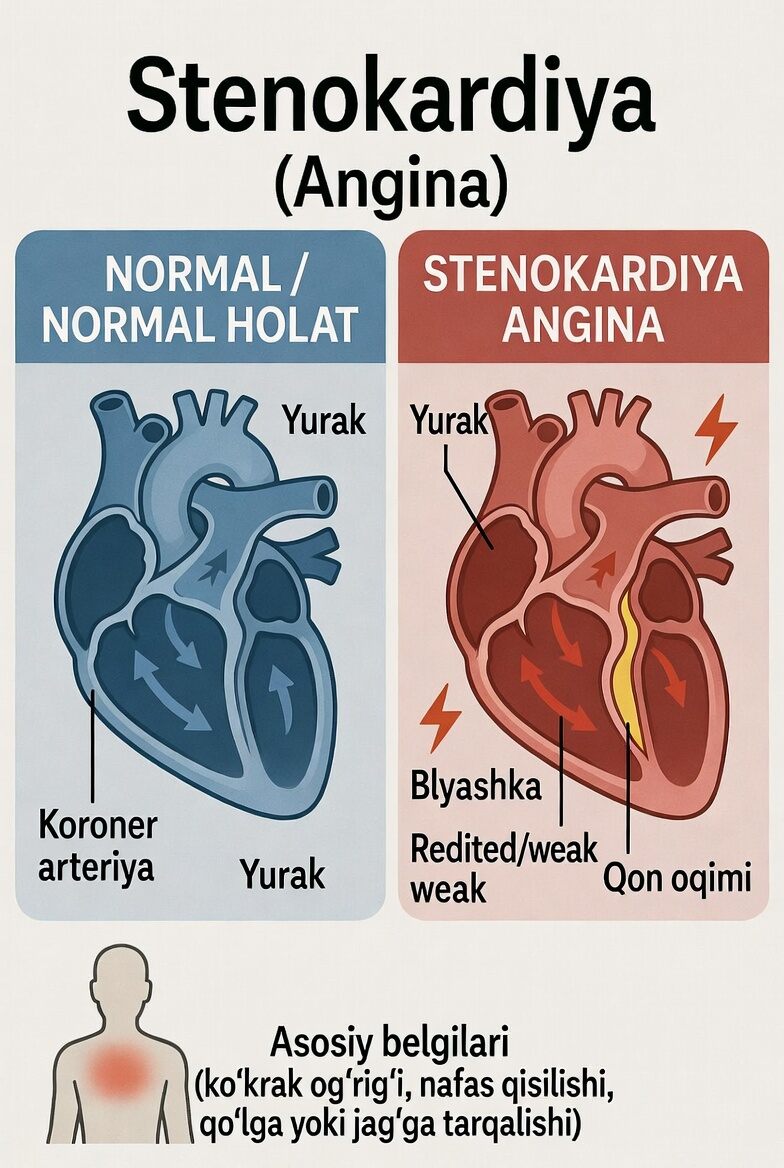
Angina Pectoris — chest pain.
In most cases symptoms can be well controlled — the most important step is accurate diagnosis and treatment.
Why it happens (simple explanation)
Main cause — atherosclerosis of heart vessels (narrowing of arteries). High blood pressure, high cholesterol, smoking, obesity and sedentary lifestyle increase the risk.
How it is diagnosed
Evaluation is done step by step:
- Cardiologist examination and detailed pain history
- ECG (during pain and at rest)
- Heart ultrasound (ECHO) and stress test
- Coronary angiography if needed
How it is treated
Treatment is chosen individually.
Medications
Vessel-widening drugs (nitrates), blood thinners (aspirin) and cholesterol-lowering drugs quickly relieve symptoms.
Non-medication methods
Low-salt diet, daily light walking, quitting smoking and stress management greatly reduce pain.
Surgical methods
If vessels are severely narrowed, stent placement or bypass surgery is considered.
FAQ
What is angina pectoris?
Chest pain due to insufficient blood to the heart.
Is it always dangerous?
Yes, untreated it can lead to heart attack.
What can you do at home?
Daily walking, reducing salt and quitting smoking help.
When to see a doctor quickly?
If chest pain occurs at rest, shortness of breath increases or pain lasts more than 5 minutes.
At Farhod Madad Shifo clinic we pay special attention to accurately identifying the cause of angina pectoris and long-term symptom control: cardiologist examination, ECHO and individual plan according to the result.
📩 Contact us right now — book an appointment with our cardiologist.