
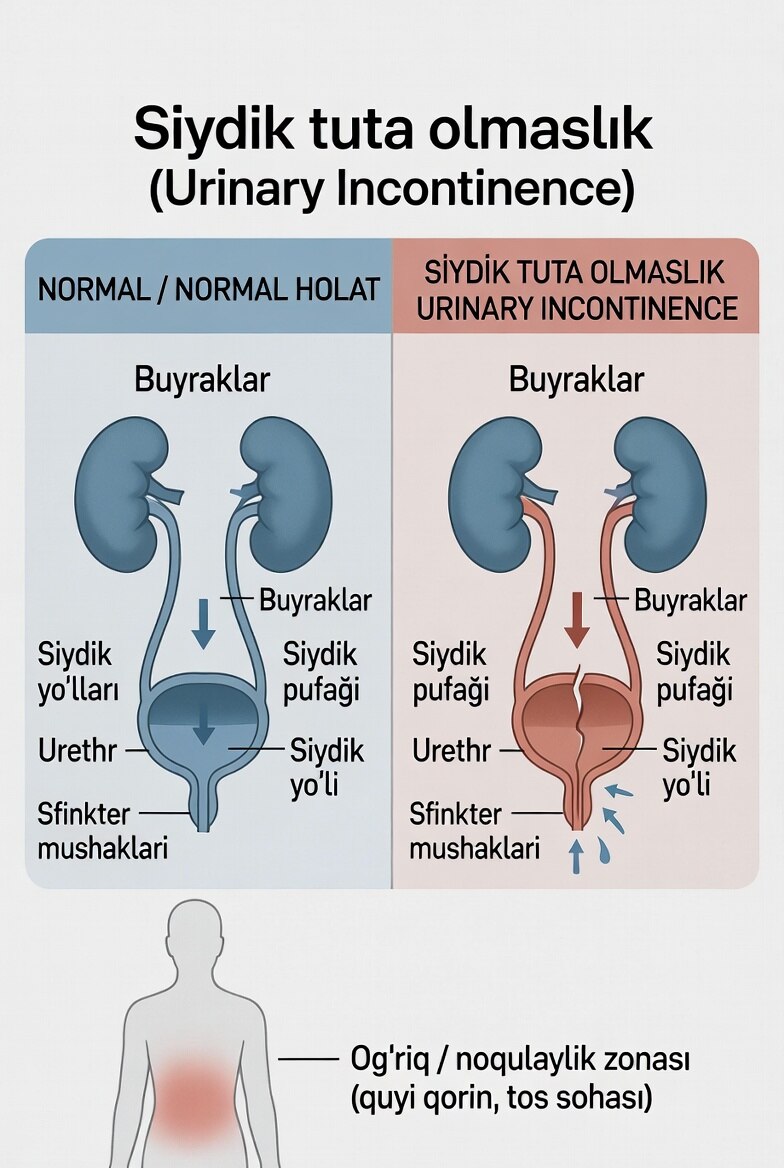
Urinary Incontinence — inability to control urine.
In most cases this problem is well treated — the most important step is finding the exact cause.
Why it happens (simple explanation)
Main causes: weakening of the sphincter after prostate adenoma or surgery, nerve damage (diabetes, stroke), obesity, chronic cough and aging.
How it is diagnosed
Evaluation is done step by step:
- Urological examination and detailed symptom discussion
- Urine tests and urination diary
- Ultrasound scan (prostate and bladder)
- Urodynamic testing or cystoscopy if needed
How it is treated
Treatment is chosen individually.
Medications and conservative methods
Medications (alpha-blockers, anticholinergics), Kegel exercises and lifestyle changes (weight loss, reducing caffeine).
Other methods
Pessary, urine-holding devices or surgery (sphincter implant) if necessary.
FAQ
What is urinary incontinence?
Inability to control or hold urine.
Is it always dangerous?
Not dangerous to health, but treatment is needed to avoid discomfort and complications.
What can you do at home?
Kegel exercises and weight reduction help.
When to see a doctor quickly?
If incontinence becomes constant or interferes with daily life.
At Farhod Madad Shifo clinic we pay special attention to finding the exact cause of urinary incontinence: examination, necessary tests, ultrasound and a clear plan according to the result.
📩 Contact us right now — book an appointment with our urologist.