
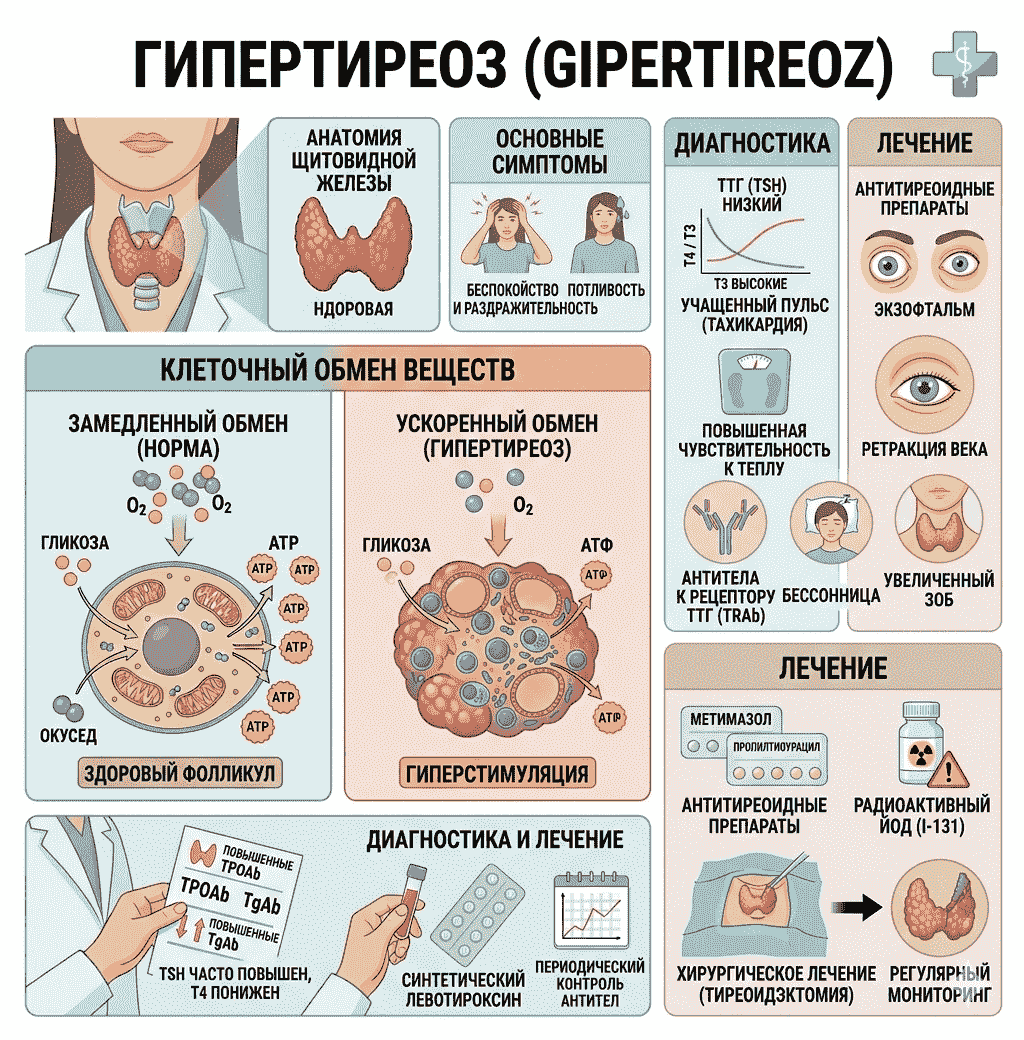
Hyperthyroidism means the thyroid makes more hormone than your body needs, which can speed up many body functions.
A common cause is Graves’ disease, an autoimmune condition that overstimulates the thyroid.
Symptoms:
Fast heartbeat/palpitations, anxiety or tremor, heat intolerance and sweating, weight loss, sleep problems and fatigue.
Some people (especially older adults) may have less obvious symptoms, so blood tests matter.
How to diagnose?
- Blood tests measuring TSH, T4 and often T3 confirm hyperthyroidism (typically low TSH with higher T4/T3).
- Additional testing may be used to clarify the cause (e.g., Graves-related antibodies).
How to treat?
Treatment is usually effective and is chosen based on cause, severity and individual factors.
Main options include:
- Antithyroid medicines
- Radioiodine therapy
- Surgery in selected cases
- Supportive treatments (for symptoms like fast heart rate) may also be used by clinicians.
FAQ:
Can it resolve without treatment? Sometimes temporary causes exist, but many cases need treatment/monitoring.
Which tests are key? TSH + free T4 (often T3).
Is follow-up necessary? Yes—thyroid levels are monitored during and after treatment.
At Farhod Madad Shifo, we’ll interpret your thyroid labs clearly and build a practical treatment plan with follow-up monitoring.
✅ Message us or book an endocrinology appointment.