
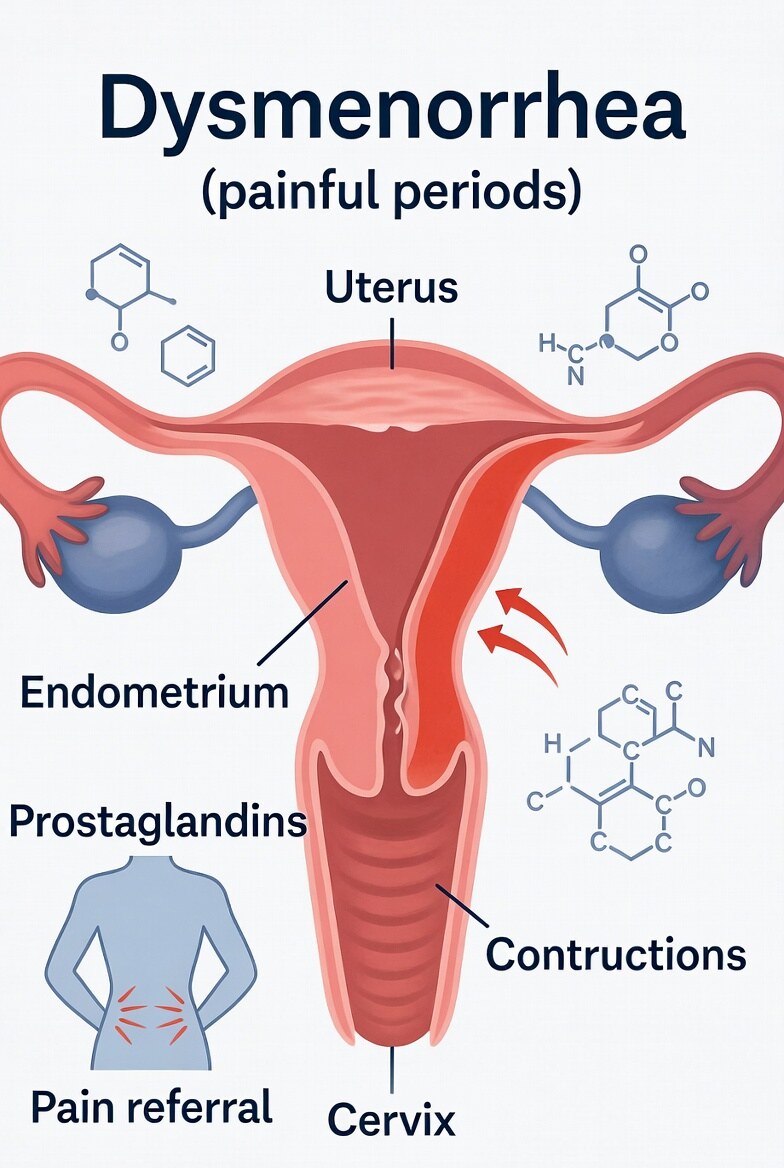
Dysmenorrhea (Painful Periods) — severe abdominal cramps that come with your period.
In most cases it is well controlled — the most important step is finding the exact cause.
Why it happens (simple explanation)
Primary dysmenorrhea occurs due to excessive production of prostaglandins.
Secondary dysmenorrhea is caused by conditions such as endometriosis, uterine fibroids, adenomyosis or infections.
How it is diagnosed
Evaluation is done step by step:
- Gynecological examination and detailed talk about your menstrual cycle
- Pregnancy test
- Blood tests
- Ultrasound scan
- MRI or laparoscopy if needed
How it is treated
Treatment is chosen individually.
Medications
Anti-inflammatory drugs like ibuprofen or naproxen are the first choice for quick pain relief. Hormonal contraceptives also help.
Non-medication methods
Warm compresses, light exercise, yoga and balanced diet significantly reduce pain. For secondary type, treating the underlying cause is important.
FAQ
What is dysmenorrhea?
Severe abdominal pain that occurs during menstruation.
Is it always dangerous?
Primary dysmenorrhea is usually safe, but secondary type may hide serious conditions.
What can you do at home?
A warm water bottle and rest can help.
When should you see a doctor quickly?
If the pain interferes with daily life or usual painkillers don’t work.
At Farhod Madad Shifo clinic we pay special attention to finding the exact cause of dysmenorrhea: examination, necessary tests, ultrasound and a clear plan according to the result.
📩 Contact us right now — book an appointment with our gynecologist.