
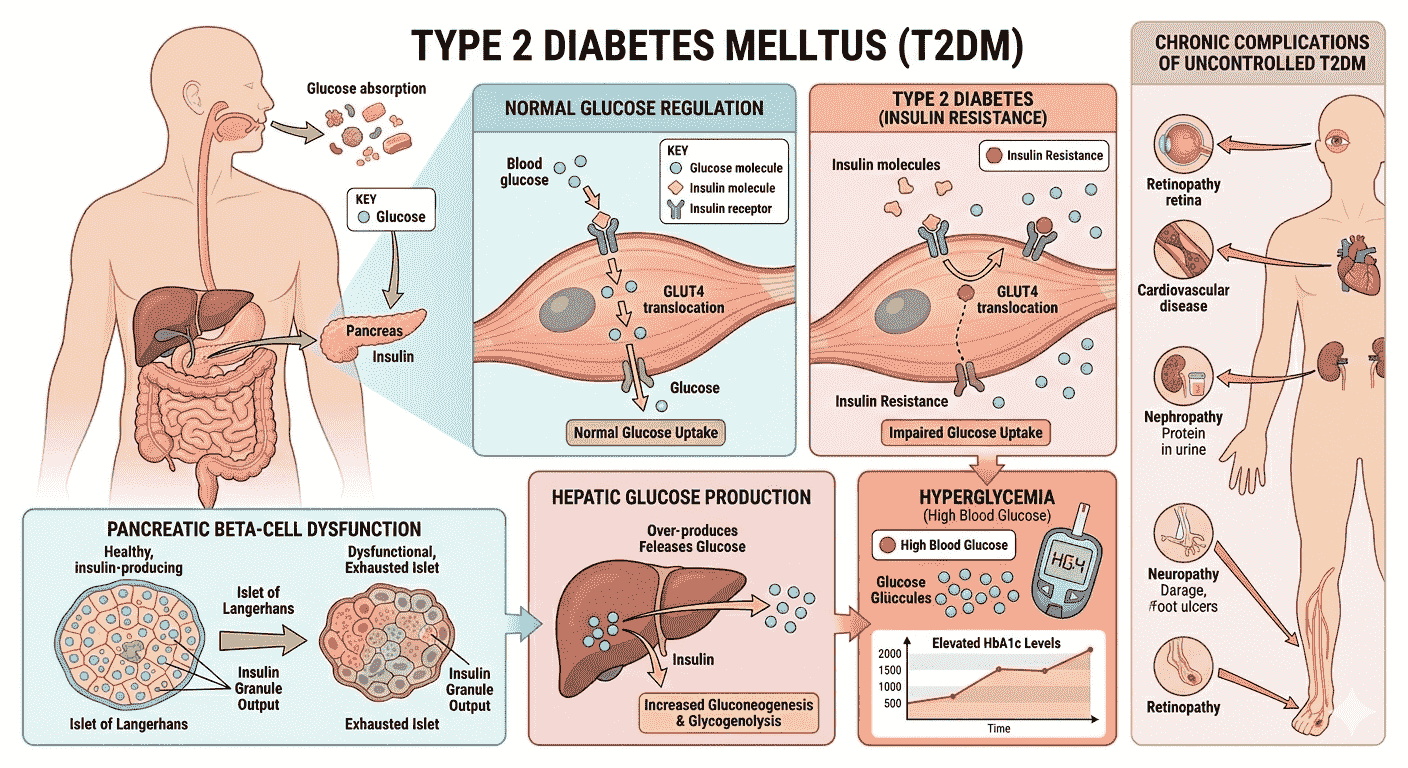
Type 2 diabetes develops when the body doesn’t respond well to insulin (insulin resistance) and/or the pancreas doesn’t make enough insulin, so glucose stays high in the bloodstream.
This is common — and with a practical plan, many people keep glucose levels stable and reduce long-term risks.
Common symptoms:
Increased thirst and urination, fatigue, blurred vision, numbness/tingling in hands or feet, slow-healing sores.
How to diagnose?
Key tests and widely used thresholds:
- A1C: diabetes at ≥ 6.5%
- Fasting plasma glucose: diabetes at ≥ 126 mg/dL (7.0 mmol/L)
- 2-hour OGTT: diabetes at ≥ 200 mg/dL (11.1 mmol/L)
How to treat?
- Lifestyle foundations (food choices, regular activity, weight management) can prevent/delay progression and improve control.
- Medication if needed — many people are offered metformin first, and other options may be added based on individual goals and risks.
- Ongoing monitoring helps prevent complications affecting the heart, kidneys, eyes, nerves and feet.
FAQ:
Can I have type 2 diabetes without symptoms? Yes.
Is insulin always required? No — it depends on your control and clinical needs.
Why does early diagnosis matter? It reduces the risk of long-term complications.
Want clear answers fast? At Farhod Madad Shifo, we’ll explain your results clearly and create a practical step-by-step plan tailored to you.
✅ Message us or book an endocrinology appointment.